

Law Enforcement Officer Training
Thank you for your interest in learning more about dealing with tic disorders!
Dealing with stressful situations can be more difficult with tic disorders such as Tourette Syndrome. These resources provide the necessary tools and information for law enforcement officers and first responders to navigate and deescalate encounters with those with Tourette Syndrome.
Tics can increase in high stress situations, such as being stopped by law enforcement. It is critical to be aware that an encounter with a law enforcement official- an anxiety and stress provoking experience for some individuals- might cause someone with Tourette Syndrome or other Tic Disorders to tic more and exhibit more symptoms than in a calmer situation.
It is very difficult for those with TS to stay still and remain quiet due to the sudden movements and sounds of tics. An estimated 86% of individuals with TS also have another co-occurring condition, which may also affect how the person reacts in a situation with law enforcement.
Law enforcement officers may encounter someone with TS or Tic Disorders uttering obscenities, racial statements, or socially inappropriate phrases (coprolalia). It is also possible that law enforcement may encounter someone acting out obscene gestures (copropraxia). These tics, like all others, are involuntary.
It is important for law enforcement officials to try and ignore the typical TS behaviors, even the swearing and perceived anger, and not be drawn into further confrontation.
Video Series
This video series provides training on what Tourette Syndrome is and offers de-escalation techniques as well as real-life examples of what an officer may encounter and the best way to manage an encounter.
Video 1:
Title
Description
Video 2:
Title
Description
Additional Resources
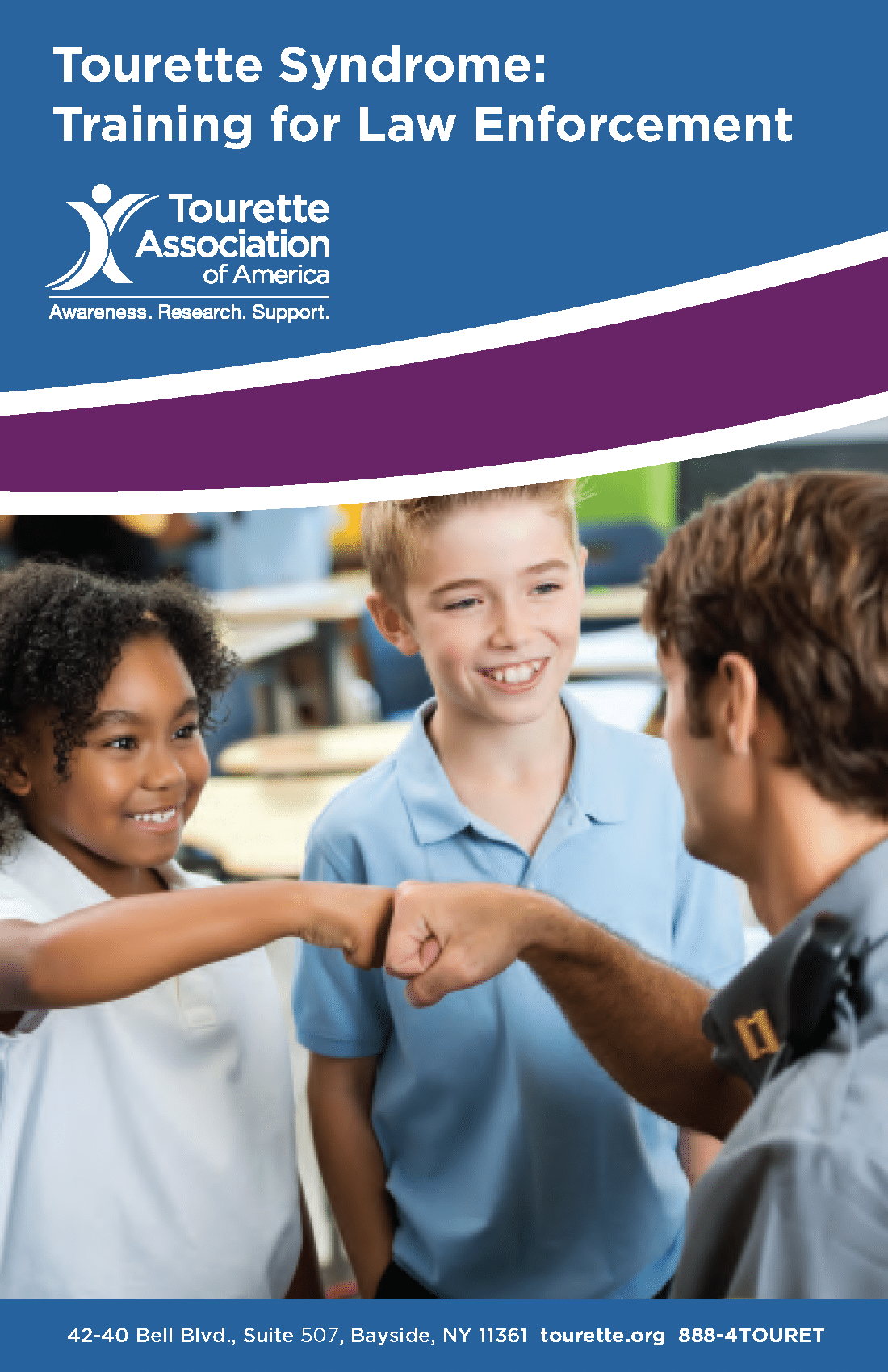
This toolkit provides resources to law enforcement, EMTS, first responders, and other personnel to help understand and support children with Tourette Syndrome and Tic Disorders.