Resources
Looking for more information about dealing with Tourette Syndrome and tic disorders?
We have a number of resources including printable documents, graphics, and articles to help guide you to the answers you need. For even more information and resources, check out tourette.org.
Introductory information about Tourette Syndrome.
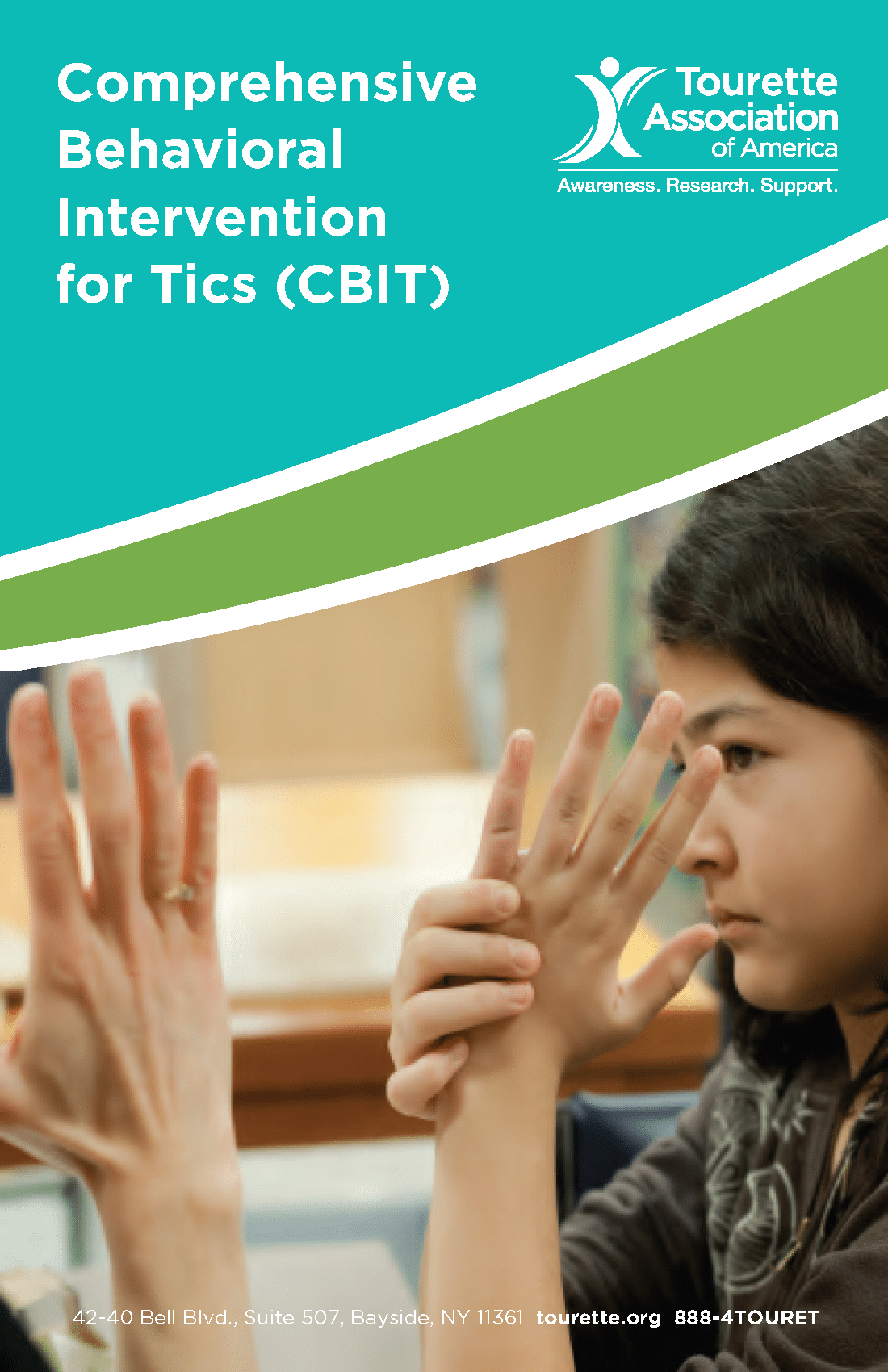
Comprehensive Behavioral Intervention for Tics (CBIT) is a non-medication treatment can effectively reduce tic severity through therapy and behavioral changes. The purpose of this brochure is to introduce you to CBIT and common questions about the treatment, discuss the effectiveness of CBIT, and describe how to find a trained CBIT provider.
Emotional overload is a common feature of Tourette Syndrome (TS) and can also be referred to as rage attacks, intermittent explosive disorder (IED), emotional dysregulation, sensory dysregulation, and emotional outbursts. This document provides details on how emotional overload can manifest, as well as strategies that can be implemented to better cope and regulate these occurrences.
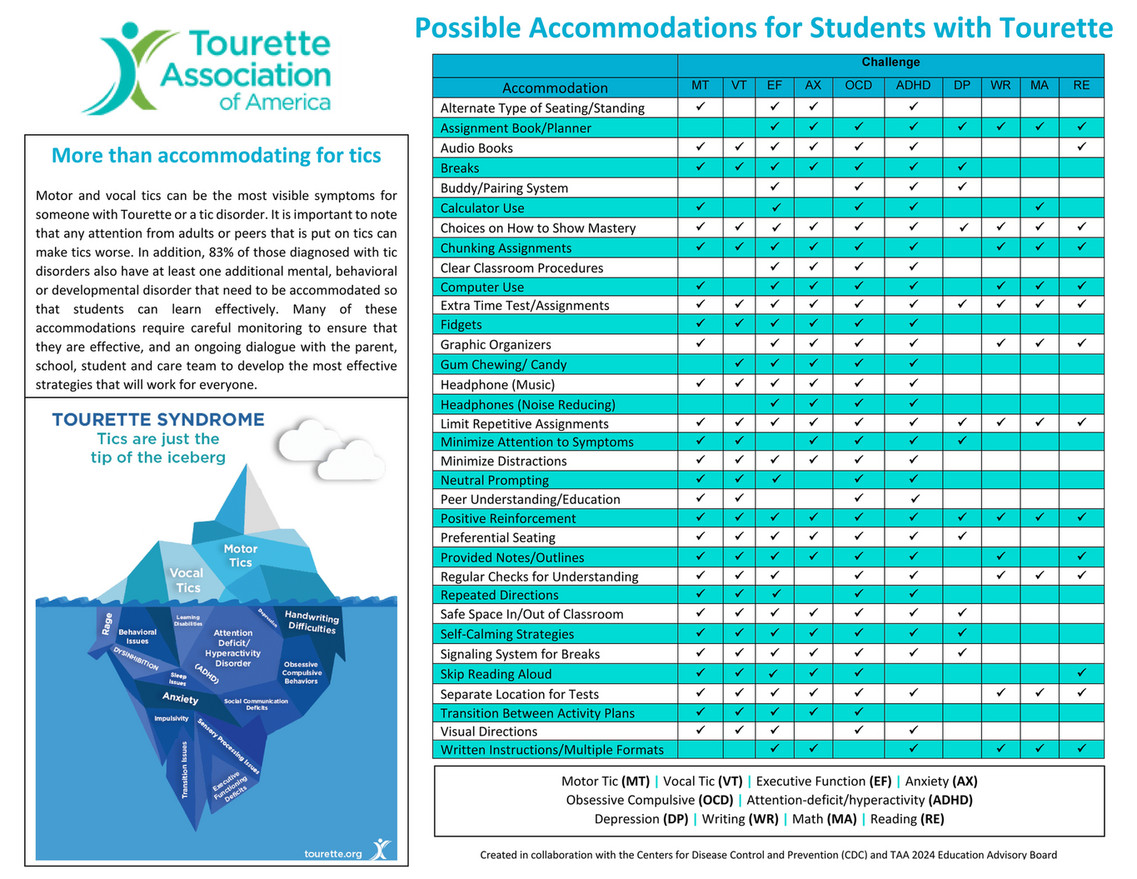
Helpful chart that explores possible accommodations available for students with Tourette Syndrome.

Printable documents to get a sense of what you or your child may benefit from as well as specific tools that can be used for reading, writing and organizing.
An educator’s guide to planning and support.

Coprolalia is the medical term used to describe one of the most puzzling and socially stigmatizing symptoms of Tourette Syndrome—the involuntary outburst of obscene words or socially inappropriate and derogatory remarks. This article provides understanding as to why this happens, and ways to cope.

Tourette Syndrome and its related disorders can manifest as behaviors that often appear to be purposefully disruptive, attention seeking or manipulative. It is therefore not unusual to misinterpret symptoms of the disorder as behavioral problems rather than the neurological symptoms that they are. This is a guide that walks you through the different behavioral symptoms that may occur, as well as how to best address them.
This brochure is a toolkit that offers information and resources on how to best support a family member with Tourette Syndrome.
“I Have TS” Card
Much of the stigma that surrounds Tourette Syndrome (TS) and Tic Disorders comes from misunderstanding. These informational cards help explain the effects of TS and Tic Disorders and are particularly useful in high stress situations, like traveling and crowded places.
Download a Digital ‘I Have TS’ Card at idcard.tourette.org
Download the new printable version here.
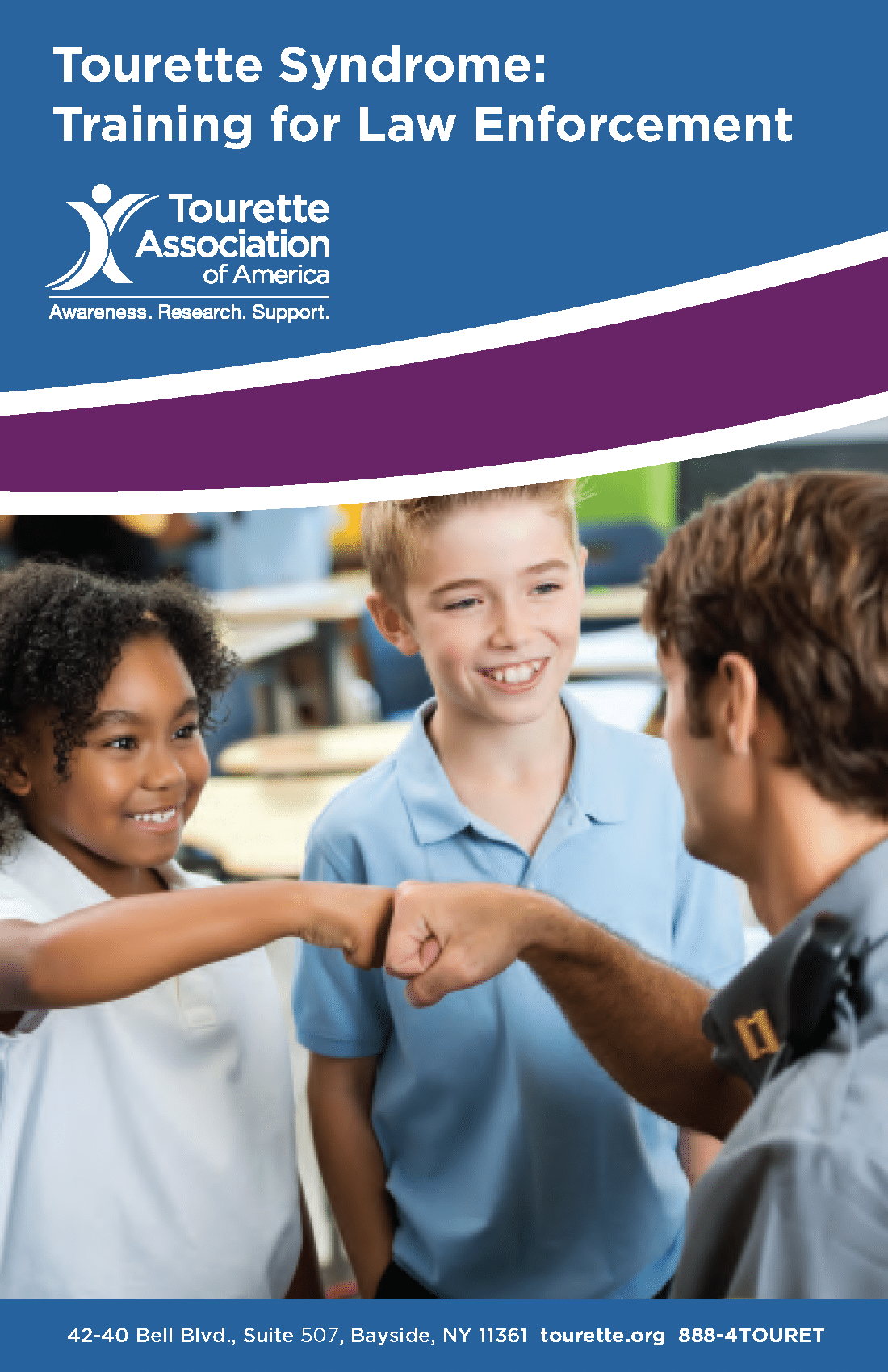
This document provides law enforcement officers the information they need to understand Tourette Syndrome, and understand how to best handle encounters with those with Tourette Syndrome and tic disorders.
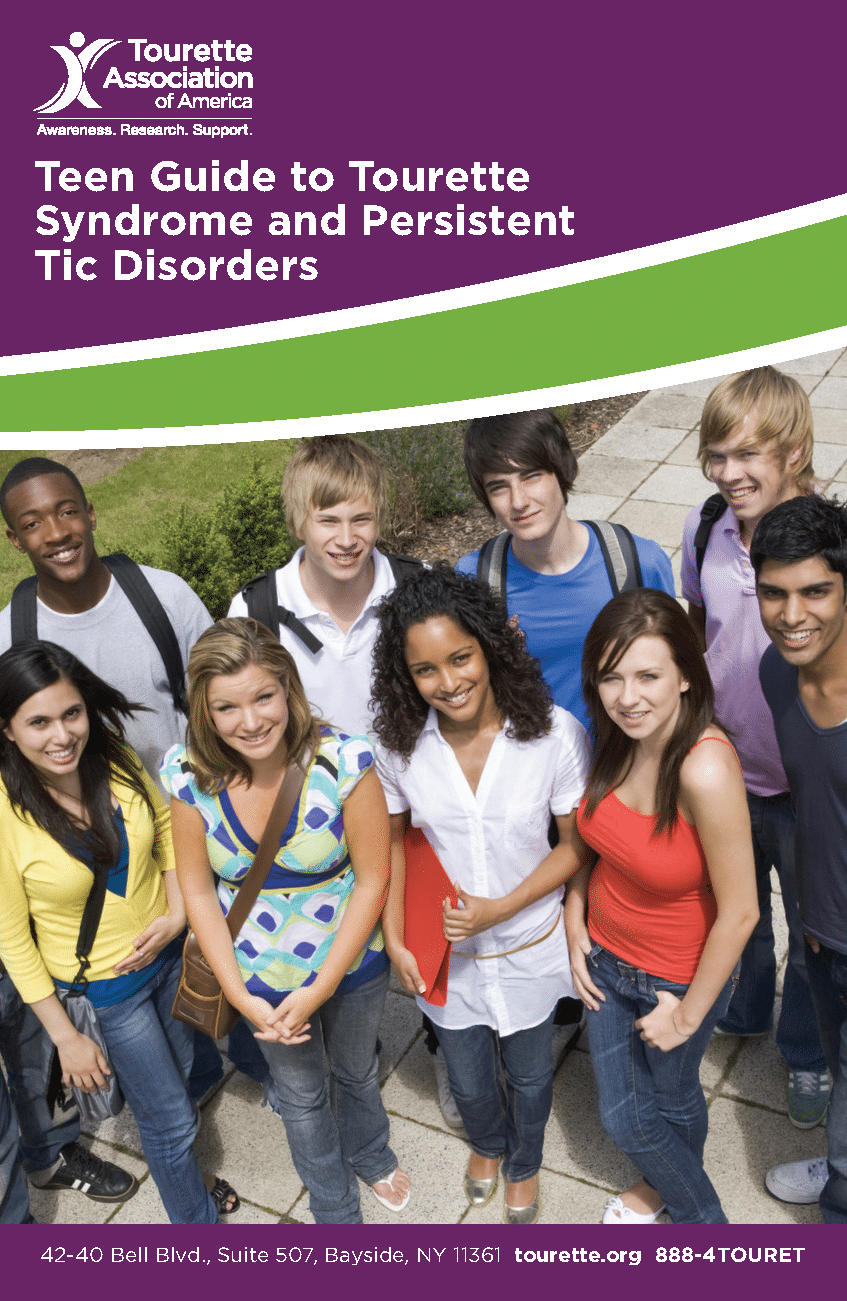
This toolkit is intended to be a guide for teens who are learning to navigate life with Tourette syndrome (TS).
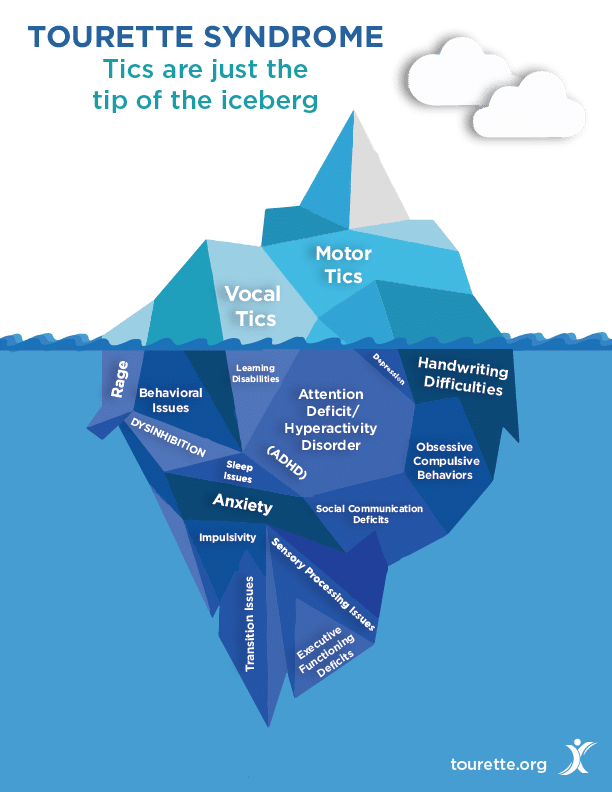
This printable graphic illustrates the many symptoms and experiences that encompass Tourette Syndrome, not all of which are necessarily observable on the surface.
The Tourette Association of America’s Center of Excellence (CofE) program aims to improve the quality of life of people with Tourette syndrome and other Tic Disorders by promoting the highest level of care, research, education & training, and advocacy & awareness for these conditions. The program, which was developed in collaboration with leading medical and scientific experts in Tourette and related conditions, was launched in 2014 with the initial designation of 9 CofEs located at premier medical and academic institutions across the United States.
The Centers are collaborating with the Association and our professional and lay communities to address many needs and concerns across the following key areas as detailed in the program Blueprint.

Director: Jaclyn Martindale
Co-Director: William Tyler Cecil
Coordinator: Kelly Nedvin
Our center provides comprehensive care for individuals with Tourette Syndrome and its related disorders. We are a clinically busy site and serve as the sole academic center for the 5th largest non-for-profit healthcare system in the US. Our catchment area includes North Carolina, South Carolina, Virginia, Tennessee, and West Virginia. We hope to bring world class care to these individuals and their family. In addition to our clinical expertise in TS and its related disorders, our site strives to provide compassionate care and research on the broader impact of TS and its related disorders to the individuals and their families.